Health · Top Story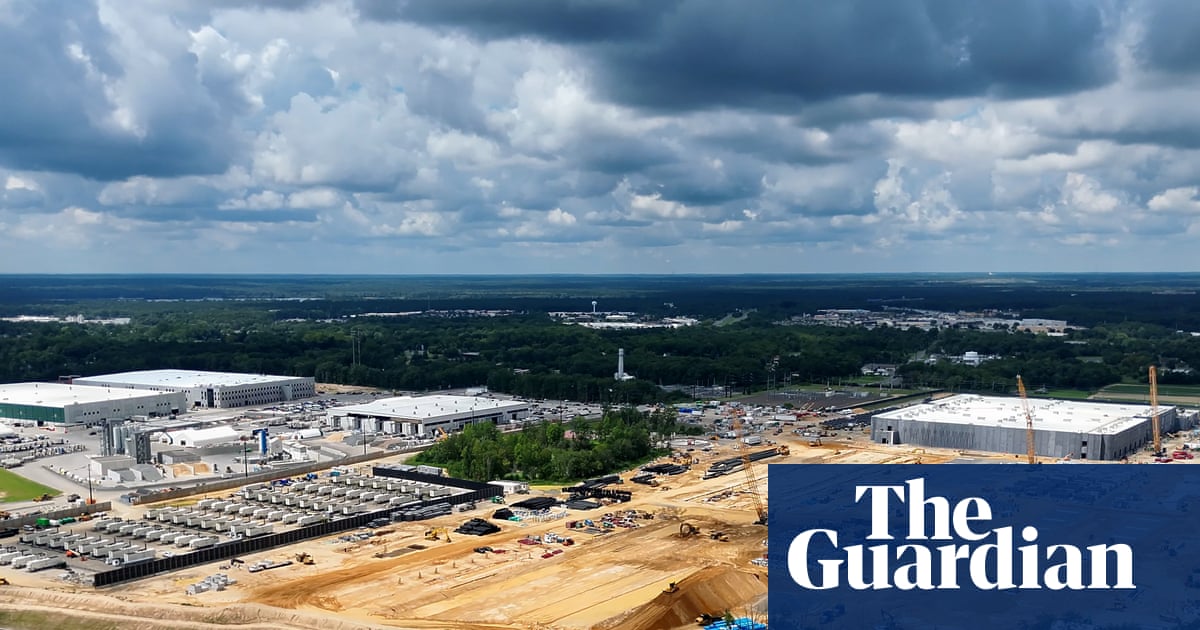
DataOne, the Microsoft-linked New Jersey datacenter recently hit with a $1m fine for running unpermitted generators, emitted large amounts of health-harming air pollution for nearly a year before state regulators stepped in, according to public records obtained by Floodlight. The Vineland facility’s 62 gas-fired generators became public in August after a Floodlight/Guardian visual investigation found them operating without permits. The New Jersey department of environmental protection last week fined the company over the fleet but did not disclose how long the generators had been operating nor how much air pollution they had released into the surrounding community over the past year.
Floodlight sent technical data about the generators – obtained through public records requests – to a Rutgers professor and a former EPA air division chief. “Our best estimate is that the generators emitted about 140 tons of NOx,” said Xiaomeng Jin, an assistant professor at Rutgers department of environmental sciences. Her analysis would rank DataOne in the state’s top five NOx polluters of 2025, per EPA data.
NOx are a dangerous group of smog-producing gases linked to asthma , heart attacks and even premature death . It’s “the most important air pollutant in the US that affects most people”, Jin said. Longtime Vineland resident Tiffany Leone-Vespa lives about a mile from the data center and said the noise from the generators sounds like an airplane in the back of her house.
“What health problems might I face in the future? Because I’ve been exposed to all of that. My kids have been exposed to it,” she said.
The site’s potential NOx emissions are even larger, according to Jin and Bruce Buckheit – a former EPA air enforcement division chief. Both concluded that at full use, DataOne’s fleet could emit more than 1,500 tons of NOx per year. That is nearly twice the amount that the Linden Cogeneration gas-fired power plant, New Jersey’s largest NOx emitter, is allowed to emit.
Operating the generators “results in very high levels of air pollution” and the fleet’s potential emissions are “well over the regulatory threshold for a new major source”, said Buckheit. New Jersey labels any facility capable of emitting more than 25 tons of NOx per year a “major source”. Obtaining a major source permit requires extensive environmental reviews, best available pollution controls and public comment periods – all before construction can even begin.
That didn’t happen at DataOne, despite the operation being capable of emitting more than half the NOx put out by New Jersey’s entire power sector. Drone video shows heat signature of datacenter generators “That is basically offsetting all the air quality improvements [regulators] have achieved for decades,” Jin said. DataOne did not respond to Floodlight’s emissions analysis.
Instead, its spokesperson sent the same statement as they did in response to NJDEP’s decision to fine them, saying the company is “transitioning to low-emission, quiet fuel cells as part of the site’s permanent power solution and have the necessary approvals in place for this solution”. The company disagrees with NJDEP’s determination and had argued the generators did not require permits – but plans to apply for them now. A Microsoft spokesperson wrote that “we expect our suppliers and partners to meet all applicable legal and regulatory obligations” and the company was working with DataOne “to support their completion of the facility’s transition to its permanent long-term power solution”.
In press releases, New Jersey regulators said the tractor-trailer-sized generators were detected during a July 29, 2026, site inspection but not during an earlier visit in December. However, the fleet was there to find, according to a letter DataOne later sent NJDEP. The letter, obtained by Floodlight through a public records request, notes the generators first began to arrive in July 2025.
Sixteen generators started operating in October 2025, with another 16 brought online in early February. By June, all 62 had been fired up. By the time state inspectors noticed them, the unpermitted fleet had collectively run for more than 46,000 hours in total, according to the letter.
“How did 62 generators get installed and operated and nobody did anything until now? That blows me away,” Leone-Vespa said. “Clearly somebody wasn’t doing their job.” A spokesperson for NJDEP declined to comment.
For many Vineland residents, confirmation that DataOne’s generators have been running for nearly a year is a bittersweet vindication. Locals have reported strange noises emanating from the facility for months, with more than 100 noise complaints submitted to the Cumberland county department of health since March, according to records obtained by Floodlight. Many of the complaints list generators as the suspected source.
“They’re just running these monster generators. And they think, by right, they have every ability to do so at the expense of anyone else,” said local flower farmer Michael Atkinson. Atkinson’s family has been farming a patch of land beside the data center for more than 70 years.
He said DataOne is “one of the richest and worst neighbors that I have ever had to deal with in my entire life”. During a Vineland town hall meeting in late January , DataOne chief executive Charles Beyney told residents that his data center would be “polluting less than a farm”. “I’m too French to just kill my lungs, the lungs of your kids and all the community around us,” he told the crowd.
Beyney confirmed during that speech that DataOne was running generators, and he said NJDEP was aware – the agency had been at the site that same morning and was “on us big time”. While the generators may have evaded state regulators for almost a year, local officials knew about them for much longer. A City of Vineland inspection activity report noted that “phase 1 generators are online” in early February.
And in May, a Cumberland county health department inspector responding to a noise complaint visited the site and reported that the source of the noise appeared to be two generators, “possibly more”. The inspector noted that the noise “exceeded night-time violation”. As part of the record fine levied against DataOne, the state is mandating the company apply for and obtain the required permits or cease operations, but is allowing them 45 days to do so, according to a NJDEP spokesperson.
During that time, regulators are allowing the facility to continue running the generators – which are capable of emitting more than four tons of NOx in nearby neighborhoods each day. “I just don’t understand how this is being allowed,” Leone-Vespa said. She hopes independent air monitoring can help protect her community in the future.
Until then, she has little faith in New Jersey regulators to watch out for them. “It’s like they don’t care about the residents. This story is from Floodlight , a non-profit newsroom that investigates the powers stalling climate action.
Sign up for Floodlight’s newsletter here
Source: The Guardian