Health · Top Story
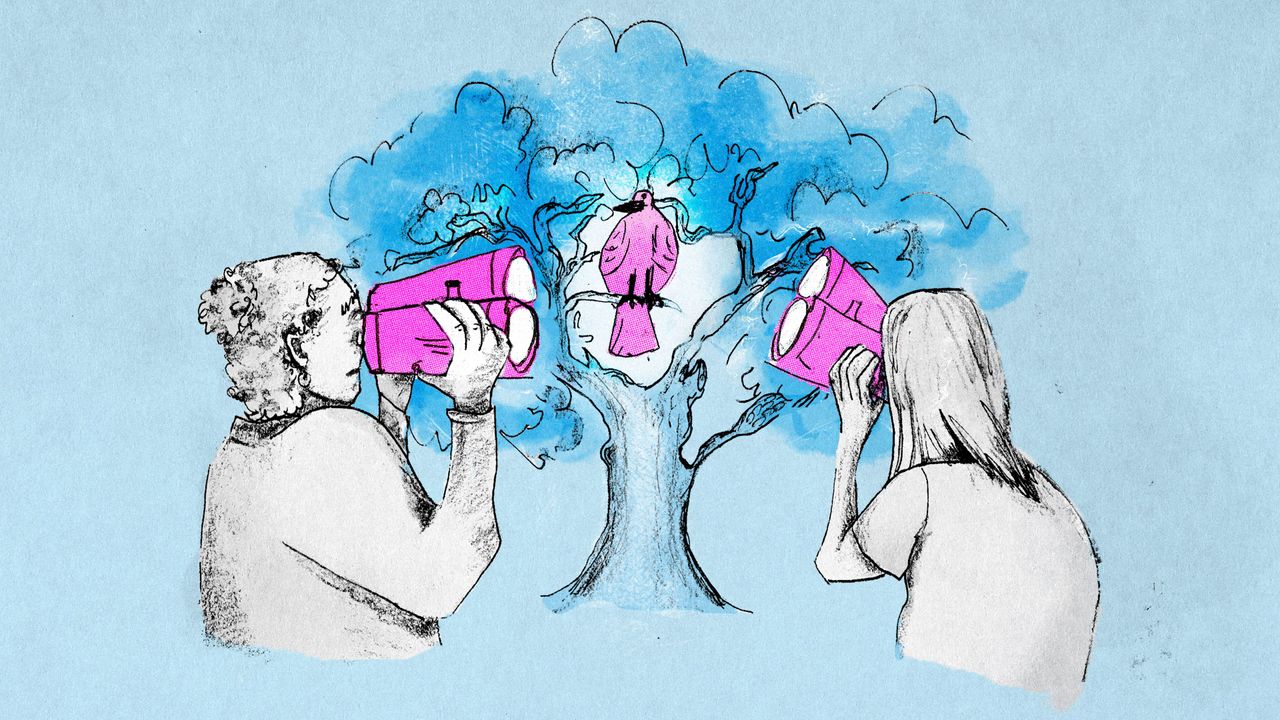
20 minutes ago Becca Warner BBC/Serenity Strull (Credit: BBC/Serenity Strull) Birdwatching can help slow brain ageing and is increasingly being used as therapy for dementia patients. Every week, a group of elderly birders spend hours hunkering down inside a wooden hide in the English countryside, peering through binoculars as they excitedly share what they spot. An oystercatcher's long, bright beak probing the pebbled ground; two great crested grebes bobbing in the water, their plumed heads poised.
Most of these birdwatchers have difficulty recalling what happened earlier that day, and might struggle to follow a conversation. But they become animated when swapping notes on the birds that fill the sky around Forge Mill Lake in the UK's West Midlands. Among them is 78-year-old Harold*.
He loved the outdoors when he was younger, but more recently dementia has made him withdrawn and anxious. His daughter Lucy* brought him here, hoping that the change of scenery and peaceful lake might be good for him. After an apprehensive start, Harold began smiling when someone pointed out a robin and enjoyed watching the ducks splashing in the water.
Blue tits darted between the nearby trees, and Lucy saw Harold laugh for the first time in a long time. "For that moment in time he was present in the moment, he wasn't worried about his memory or his confidence. That is very powerful, in a gentle way," says Jenny Budinger, a community dementia advisor at Age UK, the non-profit that runs the birdwatching group.
Birdwatching is increasingly recognised as a valuable way for elderly people and dementia patients to spend their time, with groups set up in nursing homes in the UK, Germany and the US. Paying attention to birds , even through the window, can help older people feel more connected to others, experience more positive emotions and boost memory skills. Now new research shows that birdwatching can reshape the brain, much like learning an athletic sport or a musical instrument – and may even help slow the brain's ageing.
Better-organised brains Meanwhile, in the laboratory, neuroscientists are investigating how birdwatching impacts the brain. They tested keen birdwatchers' identification skills to determine who was an expert and who was a novice, then looked at their brains. The scientists found that the very structure of experts' brains was different – and that birdwatching expertise might slow age-related decline by keeping the brain more organised.
Erik Wing, who led this research at Baycrest Academy for Research and Education in Toronto, Canada, compared MRI brain scans from bird experts to those of novices while they identified birds. He found that expert brains were wired differently in regions important for functions like attention, visual perception and visual recognition. Among expert birders, these regions showed more activity – particularly when they were asked to identify birds they weren't already familiar with.
The findings don't prove whether structural brain differences are the cause or effect of birdwatching expertise. But, Wing says, one explanation is that the areas of the brain used for birdwatching might undergo "neuroplasticity" – the ability to change shape and function over time. BBC/Serenity Strull Birdwatching can reshape the brain and may help slow ageing (Credit: BBC/Serenity Strull) Wing also analysed how organised the birdwatchers' brains were.
Organisation in the brain tends to reduce with age, and lower measures of organisation are associated with reduced cognition . In experts' brains, some regions had higher levels of organisation and coherence than novices of the same age. Some of these regions were also the ones that showed more activity during bird identification.
This indicates a "kind of preservation of organisation" in the brains of experts as they age, Wing says. More research is needed to understand the nature of this preservation and how it links to wider cognitive function. But for now, the results may indicate that "acquiring this skill earlier in life might produce benefits that continue through to older adults", Wing says.
This is good news for the many Gen Z (16 to 29-year-old) birdwatchers who are getting their binoculars out long before old age sets in. Bird therapy Wing's research looked at birdwatching expertise, but other findings suggest that there may be psychological benefits to birdwatching even for those without special knowledge or skills. In fact, when it comes to experiencing psychological restoration – feelings of calm, freedom and rejuvenation – enthusiasm may be more relevant than expertise .
A study of 388 birdwatchers in Poland found that those who say they are more interested in birding than other activities and consider it an important part of their lives are more likely to experience psychological restoration than birdwatchers who are highly skilled but less enthusiastic. Simply choosing to be interested in birds, then, could have its own benefits. Elisabeth Kals, a professor of social and organisational psychology at the Catholic University of Eichstätt-Ingolstadt in Germany, is interested in how our relationship with nature shapes our life experiences and wellbeing.
She studied what happened when people living in nursing homes had the chance to watch the local bird life. Her team installed bird feeding stations outside 65 homes, positioned so that residents could watch the birds from the comfort of the indoor common area, and assessed the residents' cognition, mobility and wellbeing through self-reports and inputs from staff and family. They saw improvements after just a few weeks, and after a month birdwatching explained residents' wellbeing better than their age and care level.
"The findings were clearly positive," Kals says. Those who took part in birdwatching became more cognitively agile, she adds – meaning they were more able to follow a conversation and interact with family who visited, remember and recognise birds that had visited before, and show alertness. Nursing home staff were the first to see the difference the birds made.
"For weeks, they haven't seen a smile on [a resident's] face, and then they see the smile," Kals says. Some of the memory and concentration improvements are evident after just three to four weeks, Kals says. Her team's findings have prompted German health insurance companies – who, among others, initially funded the research project – to invest in setting up bird feeders and viewing areas in more than 400 nursing homes across Bavaria.
"It was so effective, it just economised money," Kals says. BBC/Serenity Strull Even paying attention to birds through a window can have a positive influence (Credit: BBC/Serenity Strull) In the US, a similar initiative was set up at four care communities in 2013 in Connecticut, and later in Texas and Colorado . Bird Tales is a therapy programme for people living with dementia that involves installing bird feeders in the facilities where they live and giving them stuffed bird animals that make bird-like calls so they can learn about different species.
The result has been positive for those taking part: they report finding it cognitively stimulating and say it connects them with the past. A similar programme has seen benefits for survivors of stroke, some of whom experience aphasia – difficulty speaking or understanding spoken language. The University of Montana's Intensive Comprehensive Aphasia Program started with owl spotting in 2021, and now includes guided observations and call identification of Montana's diverse bird population.
Why does watching birds have such a positive impact on how we feel and think? For Kals, it's "not just about birds as such; it is about nature, attention, emotion, meaning, social exchange, and activity coming together in a very simple way. It creates small moments of curiosity – pleasure, anticipation".
And, she adds, it is "extremely accessible". This may be why, in a UK survey of dementia patients and their carers, watching birds and other wildlife was the second most popular outdoor activity after simply walking in nature. The same survey found that challenges with transport and access are big considerations for people with dementia – which may not be such a barrier for those who can see birds from their kitchen window.
Wing says birdwatching is a means of exploring curiosity, and it is perhaps this curiosity that is so beneficial. "I think there's a lot of benefit to incorporating more novelty in our lives, in midlife and as we continue to age," Wing says. Curiosity plays an important role in maintaining cognitive function later in life, possibly because it activates norepinephrine and dopamine in the brain, which have a positive, anti-inflammatory effect.
For Kals, getting to know the birds that call and swoop around us is a way to remember who we are. "We are part of nature as human beings, but we lose that connection, unfortunately, quite early in life. [Birdwatching] is a way to reestablish this connection, and it's so simple." * Names have been changed for privacy reasons. -- For more science, technology, environment and health stories from the BBC, follow us on Facebook and Instagram .
Source: BBC