Health · Top Story
Covent Garden, London Shomos Uddin | Moment | Getty Images The U.K. economy grew 0.7% in the third quarter, in line with estimates, driven by output in the services sector. Economists polled by Reuters had expected the economy to grow 0.7% from the previous quarter. The economy grew 1.9% year-on-year in the three months to September.
The figures showed a slight improvement from the previous quarter, when gross domestic product grew by 0.5%. In the first quarter, the economy grew by 0.6%. Services sector growth The services sector expanded by 0.9%, data from the U.K.'s Office for National Statistics (ONS) showed on Thursday morning.
It offset 0.1% output growth in the production sector and a 0.7% contraction in construction. Within the services sector, information and communication was a key driver of growth, expanding by 2.1% in the quarter. "This industry has been the largest driver of GDP growth across 2026, with evidence that many of the businesses reporting the largest increases in turnover are involved in activities related to artificial intelligence and cloud computing," the ONS said.
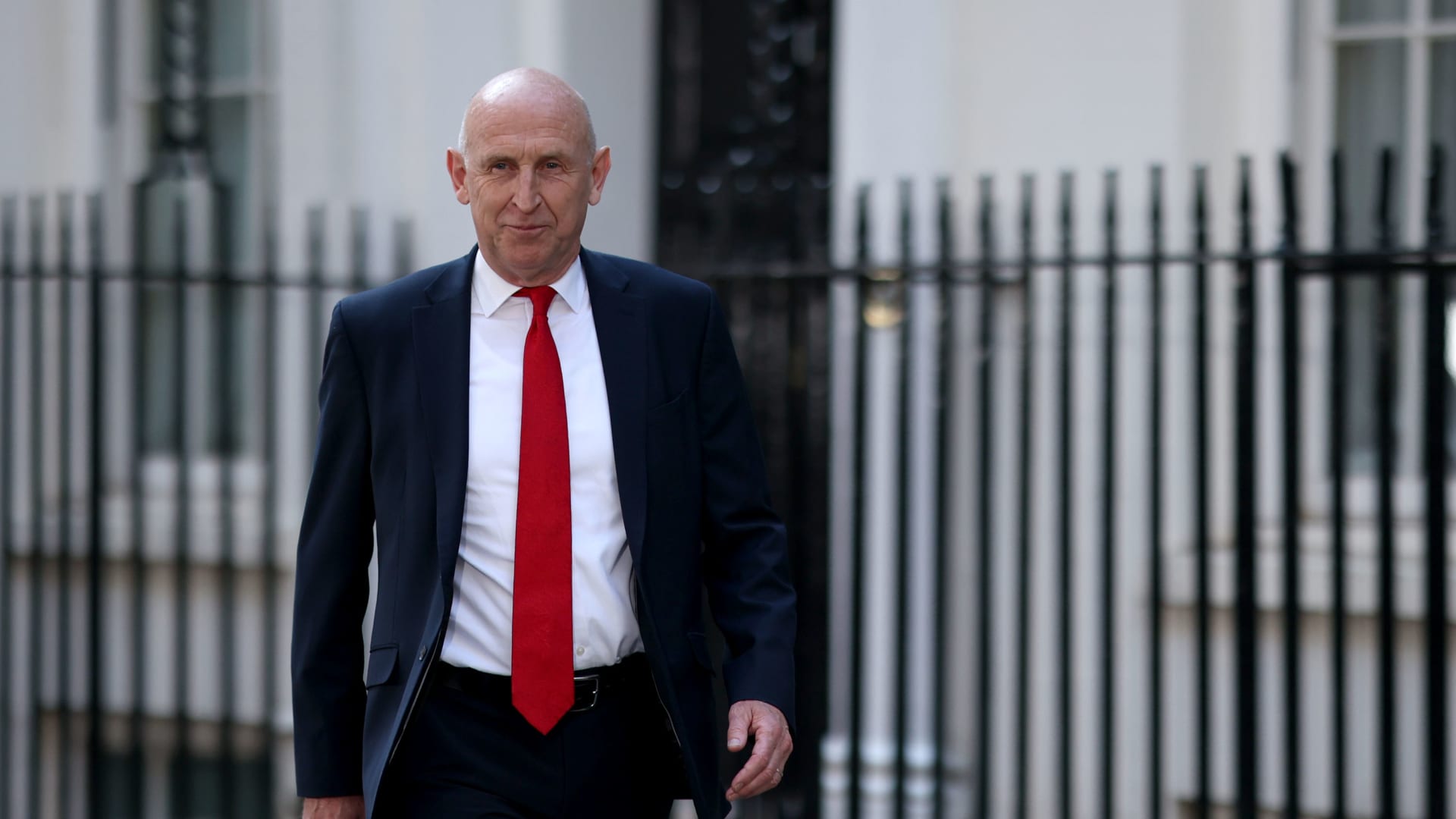
"However, because of the nature of our data collection, it is difficult for us to quantify the exact impact of these types of activities on turnover." In September, the economy grew by 0.2% month-on-month, beating expectations that GDP would flatline. It marked an improvement from the previous month, with revised figures showing the British economy carved out zero growth in August. Newly appointed Chancellor of the Exchequer John Healey departs Downing Street on July 20, 2026, in London, England.
Dan Kitwood | Getty Images U.K. finance minister John Healey said in a statement that the country was showing "stand-out resilience" despite the U.S.-Iran war hitting growth worldwide. "Our U.K. economy is growing at the fastest rate in almost ten years, outside the pandemic," he said. Prime Minister Andy Burnham said the third-quarter growth was "bringing hope for the future." The British pound was down by 0.2% against the U.S. dollar and flat against the euro on Thursday morning.
Yields on U.K. government bonds were little changed. Scott Gardner, investment strategist at J.P. Morgan Personal Investing, called the update a "decent set of results with the UK economy still proving to be relatively resilient since the US-Iran war started." But he added that the economy's strength will be tested in the months ahead.
"Nervousness in the lead up to the Autumn Budget and continued uncertainty from the Middle East war is expected to weigh on confidence and activity over the coming GDP readings," he said in a note. "With some already trimming their growth forecasts for next year, the U.K. economy still faces several headwinds." AI provides 'an extra engine of growth' Suren Thiru, chief economist at the Institute of Chartered Accountants in England and Wales, said it had been "a strikingly strong third quarter" for the U.K. "AI fired up as an extra engine of growth in the quarter, with businesses ramping up investment, including in infrastructure, tech hardware and computer programming, to strengthen their resilience against growing headwinds, while also boosting economic activity," he said in a note.
"These robust figures help keep a December interest rate rise firmly on the table by reinforcing policymakers' view that the economy remains resilient enough to cope with another rise in borrowing costs." Last week, the Bank of England raised interest rates for the first time in three years, warning that without a resolution to the U.S.-Iran war there could be more hikes ahead. The U.K.'s annual inflation rate jumped to 3.5% in September, and the Bank of England warned it could rise to around 5% by mid-2027. In its November Monetary Policy Report, the central bank remarked that U.K.
GDP growth had so far been "more resilient than expected," but said growth was projected to slow in the final quarter of the year and into 2027. Markets are currently pricing in a 73% chance of a rate hike from the Bank of England at its final meeting of the year in December, according to LSEG data.
Source: CNBC